Inside Da Vinci Communications’ Multimedia Journalism Pathway
By Stephen Tyler Thomas (‘26) and Ryan Illescas (‘26)
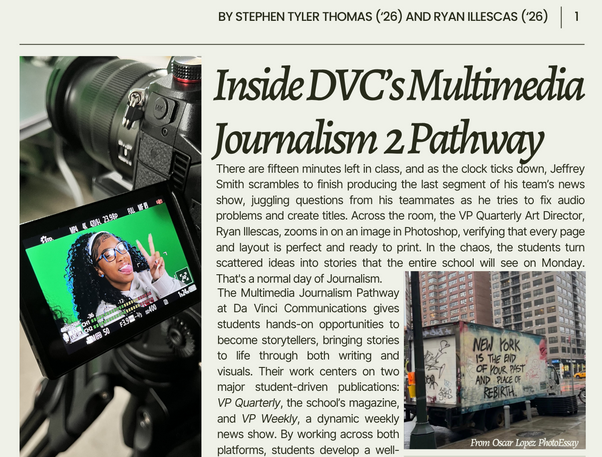
There are 15 minutes left in class, and as the clock ticks down, Jeffrey Smith scrambles to finish producing the last segment of his team’s weekly news show—juggling questions from his teammates as he tries to fix audio problems and create titles. Across the room, the VP Quarterly Art Director, Ryan Illescas, zooms in on an image in Photoshop, verifying that every page and layout is perfect and ready to print. In the chaos, the DVC Multimedia Journalism pathway students turn scattered ideas into stories that the entire school will see on Monday. For these students, this isn’t the exception: It’s just a normal day of Journalism.
The Multimedia Journalism Pathway at Da Vinci Communications gives juniors and seniors hands-on opportunities to become storytellers, bringing stories to life through both writing and visuals. Their work centers on two major student-driven publications: VP Quarterly, the school’s magazine, and VP Weekly, a dynamic weekly news show. By working across both platforms, students develop a well-rounded understanding of modern journalism and how to communicate effectively in multiple formats.
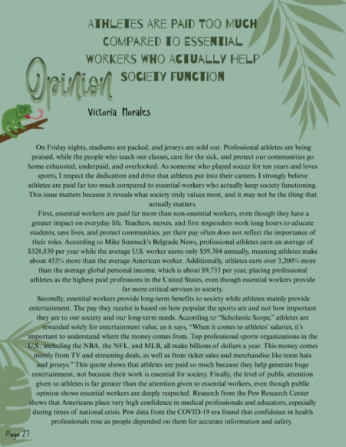
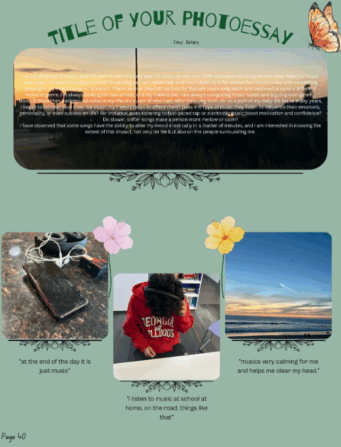
Through the magazine, VP Quarterly, students dive into print journalism, producing in-depth articles, reviews, opinion pieces, and multimedia projects like podcasts and short documentaries. QR codes embedded in the magazine let readers access these digital projects, bridging print and online storytelling. Students design layouts, edit content, and integrate visuals with their writing, with minimal teacher guidance, giving them true ownership of their work.
> Explore the latest issue of the VP Quarterly magazine
The magazine functions like a tree: the Editor-in-Chief and Art Director serve as the trunk, supporting the structure and guiding vision, and section editors act as branches supporting the vision. “Helping run the team is hard, but when we finally come out with our publication, it's all worth it” (Arshad Muhammad, Reviews Section Editor). Students are the leaves, each contributing their own stories, graphics, and designs. Using Canva, students have creative freedom to design layouts, choose colors, and craft visuals that complement both their stories and the magazine’s theme. Through this collaborative process, the pathway produces three fully published books each year, providing extensive hands-on experience in professional-level publishing and preparing students to manage projects independently.
At the same time, students produce a weekly news show, VP Weekly, gaining experience in video journalism by filming, editing, and creating broadcast-ready stories. It is the one program that every student on campus watches and experiences, making it a key part of school culture.
The show highlights stories that impact students, both on-campus and in the larger community, while keeping everyone informed and connected. Each episode takes three weeks to produce and is seven minutes long, featuring a mix of hard news and entertainment, including coverage of major school events, student achievements, interviews, and engaging segments like student spotlights and creative features. Students not only gain experience in reporting, filming, and editing, but also face real-world challenges like meeting hard deadlines and balancing team responsibilities.
As hard news anchor Haydee Otoya shares, “VP Weekly is an opportunity to explore creativity. I enjoy the sense of community it brings me every day I come to class.” Through VP Weekly, students learn to write clear scripts, develop strong interview skills, and create meaningful visual content for the entire school community.
Producing both VP Weekly and VP Quarterly is a highly collaborative effort—but the pathway is truly student-led. For VP Weekly, students take the lead in planning and producing the school’s news broadcast, choosing stories, filming segments, conducting interviews, and editing footage, with the teacher serving only as an advisor. They use tools like Google Docs, Canva, Photoshop, and Final Cut Pro to create, design, and share their work. In both publications, students make creative and editorial decisions, manage deadlines, and help their peers grow as storytellers, filmmakers, and designers, gaining authentic real-world experience in leadership, collaboration, and professional media production.
The Multimedia Journalism Pathway is more than a class; it’s a hands-on training ground where students become real journalists and content creators. By producing VP Weekly broadcasts and VP Quarterly magazines, students gain experience in interviewing, writing, filming, editing, graphic design, layout, project management, and collaboration, all skills that translate directly to their college career and beyond. The pathway empowers students to take ownership of their work, make editorial decisions, and see their stories reach a real audience, giving them confidence and a professional portfolio to showcase.
“Some of my former students have already launched successful careers in journalism, but not all of my students will choose this career path,” reflects Adam Watson, the Multimedia Journalism Pathway coordinator. “What I hope they take away are the collaboration, research, and communication skills that will set them up for success in any profession they choose.”
Whether students go on to careers in media, communications, or fields that value creativity, teamwork, and critical thinking, the DVC Multimedia Journalism pathway gives them practical, hands-on experience that prepares them to succeed in the real world.
Special thanks to DVC seniors Stephen Thomas and Ryan Illescas for their outstanding article!