Da Vinci Welcomes Leaders from Across the Nation at 3rd Annual Career-Connected Learning Gathering
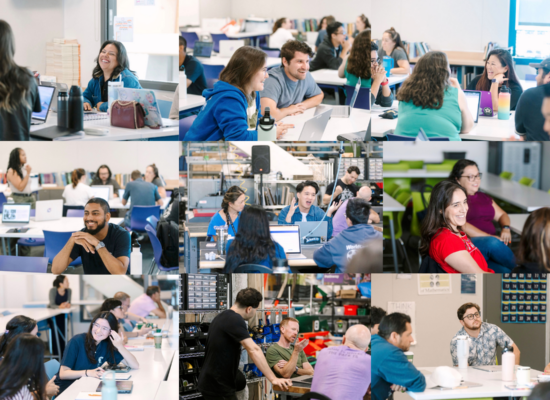
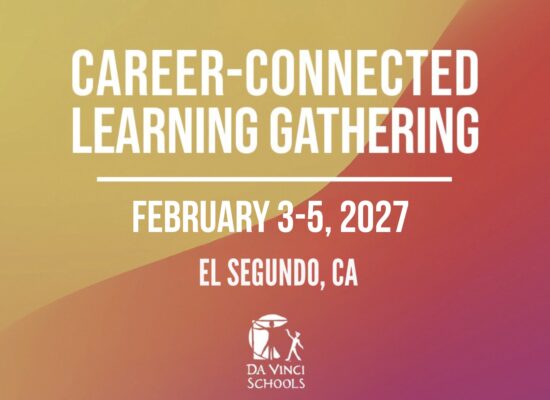
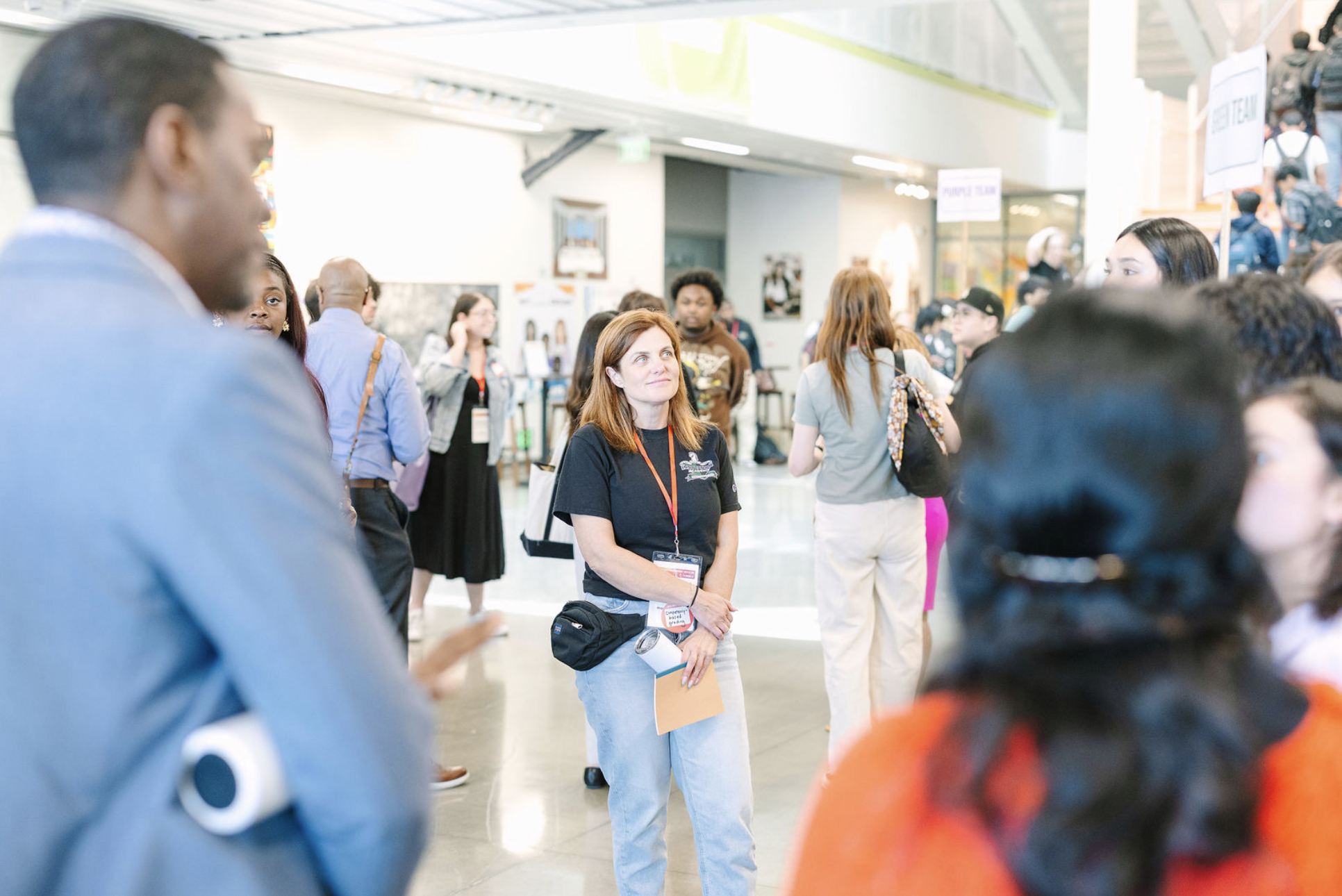
On March 18-20, Da Vinci Schools hosted its 3rd Annual Career-Connected Learning Gathering, welcoming more than 100 school, district, and network leaders from 60+ organizations across Los Angeles, along with partners from New York, Florida, Texas and beyond. Together, they convened to collaborate on the future of career education.
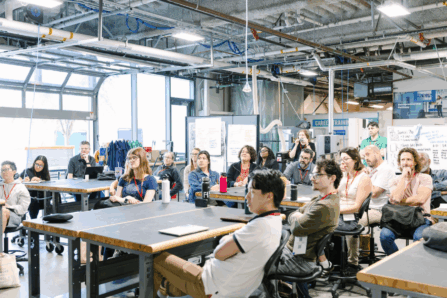
The three-day event brought together educators, industry partners, and thought leaders for a dynamic exchange of ideas focused on career-connected learning and innovation. Through an engaging program of workshops, school tours, and collaborative sessions, participants explored how project-based learning, industry partnerships, and emerging AI tools can transform student experiences and outcomes.
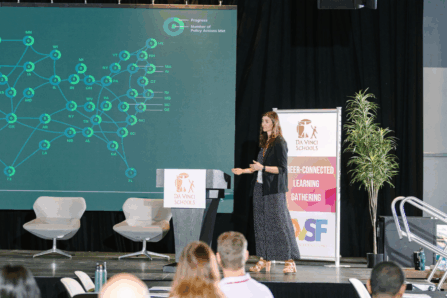
Developing the skillsets needed to navigate the challenges of AI—while maintaining human connection and centering what young people need in a rapidly evolving world—emerged as key themes throughout the gathering. The Opening Keynote by Sarah Navarro, Chief of Schools & Systems at XQ Institute, set the tone with a call to action around “Designing the Conditions for What Comes Next.”
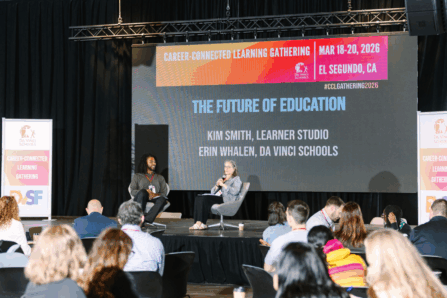
In a Welcome & Framing Conversation, Kim Smith, CEO & Founder of LearnerStudio, joined Erin Whalen, Da Vinci’s Assistant Superintendent of Student Services, to explore the future of education. They emphasized the importance of belonging, the urgency of addressing the youth mental health crisis, and the need to prioritize judgment and discernment over rote content knowledge. They also highlighted the importance of recognizing competencies developed beyond the classroom, such as through programs like 4-H.
An industry panel featuring leaders from Google, Northrop Grumman, Fabletics, and American Metal Bearing Company offered practical insights on preparing students for an AI-driven workforce. Panelists encouraged young people to seek real-world experience through internships, job shadows and pursuits beyond school, while remaining open to feedback, and confidently communicating their results and impact.
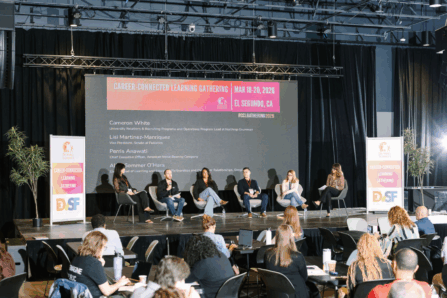
Across sessions, a clear message emerged: as skillsets rapidly evolve, students must stay positive, curious, adaptable, and grounded. They should embrace a lifelong learning mindset, build strong verbal communication and confidence, and use AI to boost productivity—without outsourcing critical thinking.
Throughout the event, sessions emphasized practical strategies for helping students discover their interests, build real-world skills, develop digital portfolios, and navigate meaningful career pathways.
One attendee shared, “I deeply appreciated the panels from industry partners and partnerships as they elucidated the specific skills and knowledge our students should build and gave insight on the world our students will enter upon graduation…Beyond the technical knowledge, the push to reframe challenges and consider mindset shifts is pushing me to consider how I lead my team and design my priorities.”
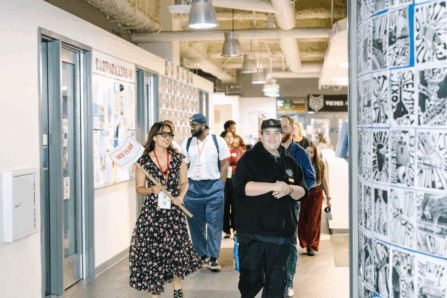
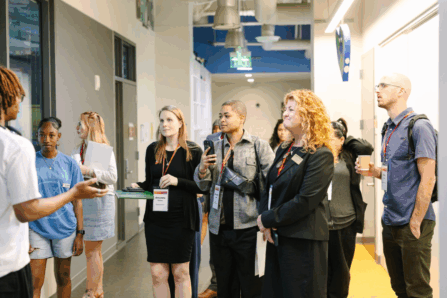
More broadly, the convening reinforced Da Vinci Schools’ role as a hub of open-source innovation and collaboration, bringing together local and regional partners alongside like-minded schools, districts, and networks from across California and the nation. By opening its model and practices to others, Da Vinci continues to contribute to a growing movement aimed at redesigning education around purpose, access, and opportunity.
Participants left with new tools, partnerships, and inspiration to take back to their communities, with one sharing, “This was a great opportunity to connect with others and build new relationships…It was especially impactful to meet professionals outside of education who are helping us better understand how AI is being used in the workplace.”
One leader reflected, “I left feeling inspired because it reflects what we hope all kids can experience—a place where they are known, challenged, and genuinely supported”
This collective work reflects a shared commitment to preparing students not only for college, but to find purpose and launch on a career path toward long-term economic mobility—supported by strong connections between education, industry, and community.