Within Connect’s hybrid model, the design team also piloted practices with parent educators to support their children’s agency - as well as their own.
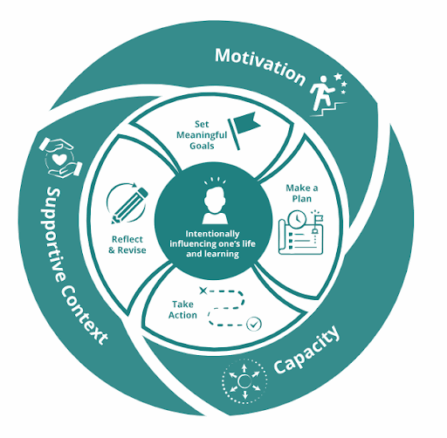
Theresa Leone, Connect’s parent educator specialist, led parent workshops focused on exploring agency, supporting goal setting, reflection, and deliberate practice at home, and reflecting on a parent educator’s tools for self-direction and perseverance. As one parent reflected: “I want to learn more about agency as an adult, parent, and educator. It’s important to model what this looks like for my children and realize that there is no right or wrong time to begin learning these skills.”
The transformation within this one year journey was remarkable: By the end of the deliberate practice pilot, teachers saw the following impact.
Increase in Learning-to-Learn Skills:
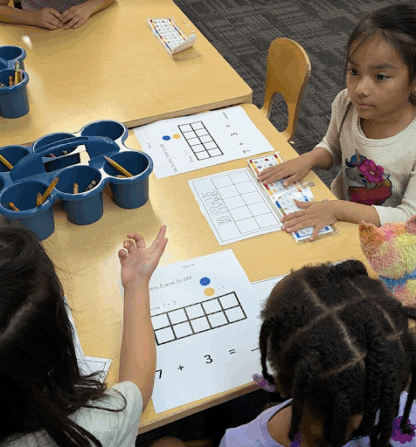
- 18% increase in students who could better articulate the specific math skills they were practicing
- 56% increase in students who could accurately assess their progress on math skills
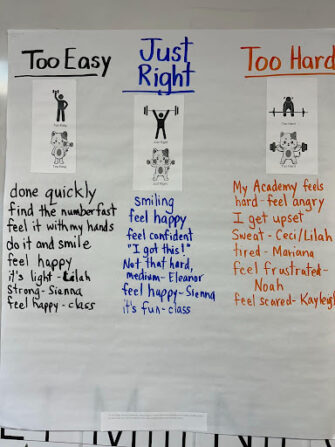
- 13% increase in students who could accurately reflect if a practice activity was the right challenge level for them
Increase in Math Achievement:
- 56% increase in number of students who were proficient in assessed math skills at the end of the deliberate practice pilot
- 72% of students made growth from one skill level to the next through deliberate practice
Beyond One Classroom: A Community-Based Design Approach
What makes this learning and impact all possible? A community-based design that involved a strong shared vision, committed people, proven models to adapt, and a process that supports continuous learning and growth. This year yielded 3 powerful take-aways:
- Make the Work Visible:
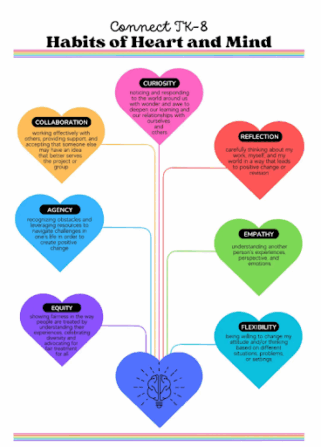
Michelle Rainey, Assistant Superintendent of Curriculum and Instruction, commended the design team during a community presentation of their work to middle school teachers, counselors, and special education teachers. "This work was powerful because it made our implicit work on habits of heart and mind explicit and visible. This ensures the work will be sustained beyond any one person."
- Both Instruction and Practice Matter
Building agency requires explicit teaching of learning-to-learn skills and regular opportunities to practice these skills authentically with feedback toward meaningful goals. One design team member captures this well: “Through this work, my students now have the opportunity to practice and actualize the habits of heart and mind around agency.”
- Design With, Not Just For
The Agency design journey was fueled by listening to student voices, intentional design, testing, and continuous learning from trying.
One teacher reflected on the power of this process: “It enables us to not only design for our students, but design with our students. This builds trust and safety to take risks in learning."
The teachers reflected on their own experience with agency within a community-based design. One teacher expressed: “I am also learning that it’s okay to take risks and try new things. We can learn as much from what doesn’t work as what does work!”
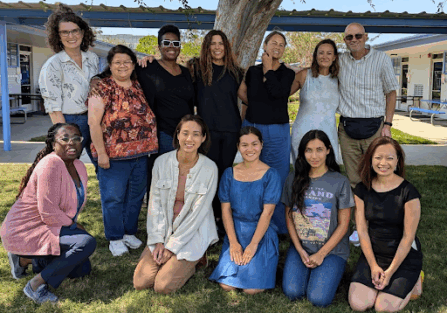
The design team has pioneered a foundation for the future. When they presented their work to the broader Connect community, their story of community-based design had a profound impact on the rest of staff. Their colleagues expressed connections, inspirations, and appreciations with one sharing gratitude: “Thank you to all the TK-Core 4 teachers. All your hard work with the students shows up when they come to us in middle school.”
The journey continues as the entire Connect community envisions how agency-building can expand across all the cores through work habits. There is no doubt they will envision a school-wide approach that is iterative rather than cookie-cutter, driven by a culture of continuous improvement, and will always deeply align with Da Vinci's vision for both students and adults.
At Connect, agency isn't just something students are learning and growing in—it's how the entire community is choosing to grow together.
---